Futuristic Font for Bold Design
There I was, staring at a blank brand board, trying to find the right visual voice for a new artisanal coffee shop. The client wanted something modern, edgy, and a little bit mysterious. I’ve seen a lot of fonts, but Hornets stood out—not just for its look, but for how it felt in use. It’s not just another decorative typeface; it has a personality that commands attention without being overwhelming.
Aesthetic and Personality
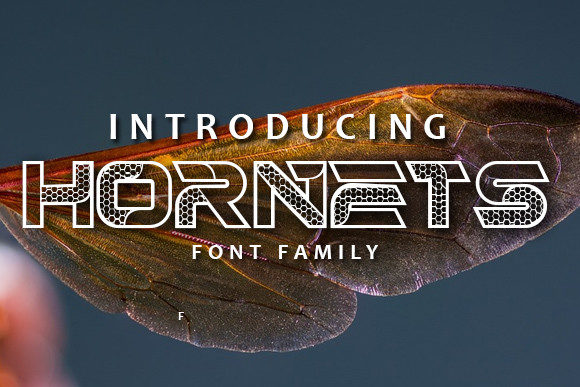
Hornets is a bold, futuristic, and decorative font that feels like it belongs in a sci-fi movie poster or a high-energy tech startup. Its sharp angles and clean lines give it a sleek, modern edge, while the subtle curves add a touch of elegance. It doesn’t scream, but it definitely makes a statement. When I first tested it on a logo concept, I was struck by how it balanced strength with sophistication. It’s the kind of font that can make a brand feel cutting-edge without sacrificing approachability.
Real-World Applications
I used Hornets on a variety of design assets, from a business card to a website header. On a business card, it added a sense of authority and style, making the contact information stand out without being too flashy. In a packaging mockup, it worked well as a headline, drawing the eye immediately. For a social media layout, it gave the visuals a dynamic energy that felt fresh and modern.
On a website header, Hornets had a strong presence, especially when paired with a simple sans-serif for body text. It didn’t clash, and the contrast helped create a clear visual hierarchy. I also tried it on a product label for a skincare line, where it complemented the minimalist aesthetic and added a touch of uniqueness without overpowering the design.
Strengths and Limitations
Hornets excels as a display or headline font. It’s not meant for long paragraphs or small text sizes, where its boldness could become distracting or hard to read. In a branding project, it’s best used sparingly—perhaps as a logo font or an accent in a larger typographic system. It works great for short phrases, taglines, or key messaging elements.
That said, there are scenarios where Hornets might not be the best fit. For formal corporate projects, a more traditional serif or sans-serif would likely be more appropriate. Similarly, if the goal is to create a clean, minimal look, Hornets’ decorative nature might feel out of place. But for brands looking to make a bold impression, it’s a solid choice.
Practical Tips for Use
If you’re considering using Hornets in your work, test it in different contexts before finalizing any designs. Try it on a shop sign, a product mockup, or a printed card to see how it holds up in real-world conditions. Pay attention to spacing and contrast, as the font’s weight can affect readability in certain layouts.
When pairing Hornets with other fonts, look for complementary styles. A classic serif font can balance its modern edge, while a clean sans-serif can help ground it in a more professional setting. Avoid overloading a design with too many decorative elements—Hornets is strong enough to stand on its own.
Font Features and Availability
Hornets comes in multiple weights and includes stylistic alternates, ligatures, and swashes, which add versatility for different design needs. It supports a range of languages, making it a good option for international branding efforts. The font is available in standard file formats and as a webfont, which is essential for digital projects.
Before using Hornets in client work, always check the licensing terms. Make sure it’s suitable for commercial use, especially if you're designing for print, websites, or merchandise. Some fonts have restrictions that could limit how they’re applied, so it’s better to confirm ahead of time.
Overall, Hornets is a versatile and visually striking font that brings a modern, bold energy to any design. Whether you’re working on a logo, a packaging system, or a social media campaign, it’s worth experimenting with. Just remember to use it thoughtfully and in the right context. After all, the best fonts don’t just look good—they help tell a story.